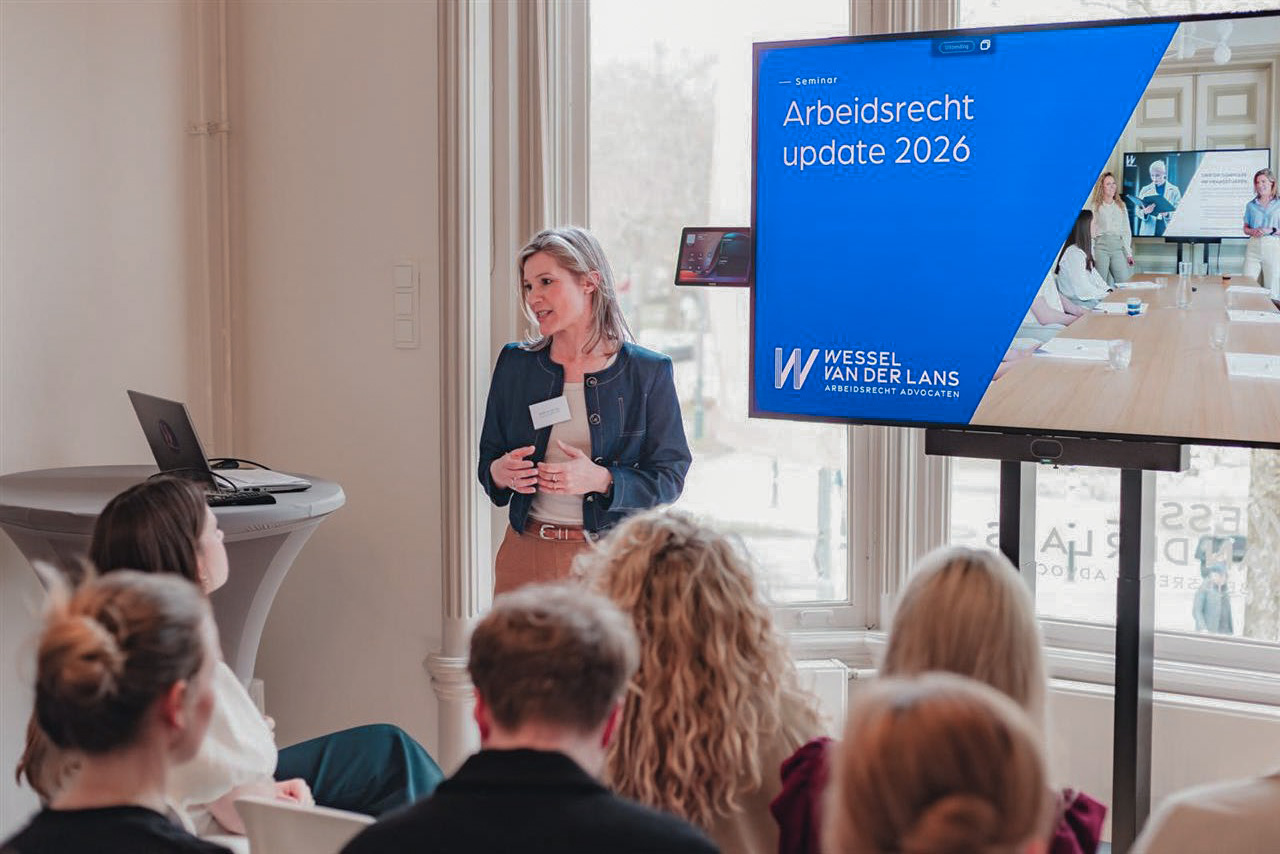
Labor law continues to evolve rapidly. For employers and HR departments, developments regarding flexible work arrangements, non-compete clauses, workplace safety, and bogus self-employment are unfolding at a rapid pace.
Many legislative proposals are still under consideration and may change in terms of content or timing. At the same time, it is already clear that various developments could have a direct impact on employment contracts, HR policies, and organizational structures in the coming years.
It is therefore important for employers to gain a timely understanding of new laws and regulations and to assess the potential consequences of these developments for their organization.
Below, we outline a number of important developments in labor law and legislative proposals.
Restrictions on the Compensation Scheme for Transition Allowances in Cases of Long-Term Work Disability
Currently, employers can apply for compensation for the transition payment they made upon the dismissal of an employee who has been on long-term disability.
The proposed legislation limits this compensation scheme to small employers. Employers with 25 or more employees would no longer receive compensation in such cases.
The previously intended effective date of July 1, 2026, was not met. It is currently anticipated that the law may take effect on January 1, 2027.
For organizations, this change could have financial implications in cases of long-term sick leave and future termination processes.
Mandatory Code of Conduct on Unwanted Behavior
A bill has been introduced to require employers to establish a code of conduct against inappropriate behavior.
The code of conduct must meet legal requirements and become part of an organization’s social safety policy. The works council will have the right of consent in this regard.
For many employers, this means that existing policies regarding social safety, standards of conduct, and internal procedures will need to be reviewed.
Clarification Regarding the Assessment of Employment Relationships and Bogus Self-Employment
The bill on Clarification of the Assessment of Employment Relationships and Legal Presumption (VBAR) is intended to provide greater clarity regarding the assessment of employment relationships and bogus self-employment.
In addition, a legal presumption of employee status will be introduced based on an hourly rate.
These developments may have implications for organizations that work with self-employed individuals or use flexible employment arrangements.
Tightening of the Non-Competition Clause
The bill regarding non-compete clauses aims to further restrict the use of non-compete and non-solicitation clauses.
Among other things, the following are being considered:
- a maximum duration of twelve months;
- a mandatory written justification;
- and mandatory compensation for employees when a non-compete clause is invoked.
For employers, this may be a reason to reassess existing employment contracts and standard clauses.
Greater Security for Flexible Workers
Legislation regarding flexible work is also a major focus of attention.
For example, proposals are being developed to further restrict on-call contracts and to extend the cooling-off period under the chain employment regulation from six months to five years.
The exact details of these proposals are still being worked out.
Mandatory Confidential Advisor
In addition, legislation is being drafted that would require employers with more than ten employees to appoint a confidential advisor.
For organizations, this directly impacts policies regarding social safety, reporting procedures, and good employment practices.
Preparing for New Legislation in a Timely Manner
Although many proposals are still subject to change, it is clear that employers will face further changes in labor law in the coming years.
That is precisely why it is wise to have employment contracts, terms of employment, and HR policies periodically reviewed by legal professionals to ensure they comply with current laws and regulations and reflect new developments.
Want to Know more?
Would you like to know which developments are relevant to your organization, or would you like to have your existing employment contracts and HR policies reviewed? The employment law attorneys at Wessel Van der Lans Advocaten would be happy to help you assess the implications of new employment law legislation for your organization.