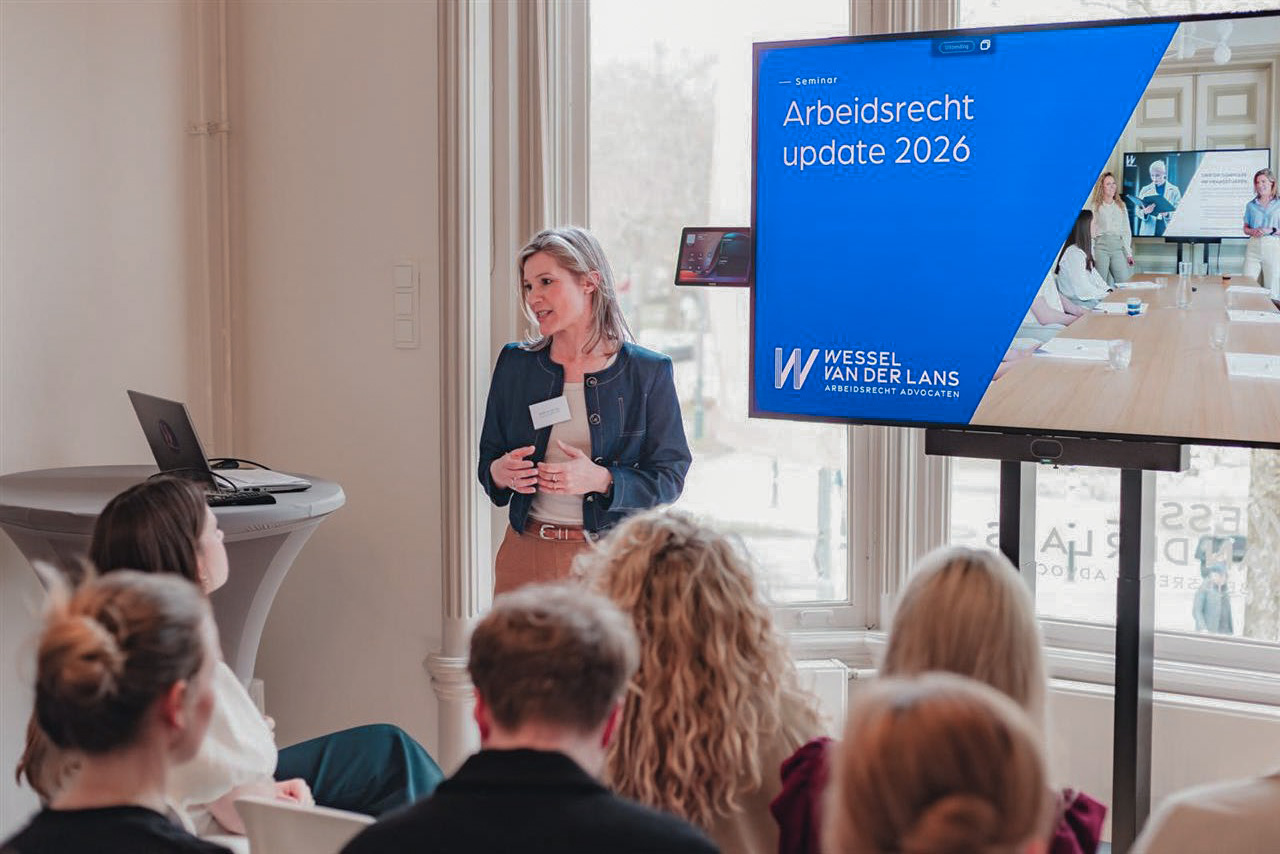
The dismissal of a statutory director of a private limited company (BV) is a process that must be carefully prepared and executed. Legal complications can arise quickly, as both corporate law and employment law aspects are relevant when dismissing a statutory director. In this article, lawyer Emilie van der Lans discusses the steps you must follow and provides an overview of the key points of attention.
Step 1: Gather Information and Analyze the Situation
The first step in dismissing a director is to map out the factual situation and legal structure. It is important to establish whether the person in question is indeed a statutory director and has been validly appointed as such. Additionally, it may be relevant to investigate whether the director is also involved with other companies, both in the Netherlands and abroad.
Furthermore, the nature of the contractual relationship between the BV(s) and the director must be examined. Is the director employed under an employment contract, a management agreement, or through a management BV? This contractual relationship largely determines which dismissal procedure must be followed.
Step 2: Resolution of the General Meeting of Shareholders (GMS)
In the dismissal of a statutory director, the General Meeting of Shareholders (GMS) typically plays a central role. The GMS is usually the competent body to dismiss a statutory director. The GMS resolution must comply with corporate law requirements. If there is a works council (OR), it has an advisory right regarding the proposed dismissal. Additionally, the director must be given the opportunity to present their views and cast an advisory vote before the GMS makes a final decision.
The articles of association of the BV are of great importance in this process, as they may contain specific provisions regarding the dismissal procedure, such as the requirement for a qualified majority in voting. Any contractual agreements regarding notice periods and compensation must also be carefully observed.
Step 3: Employment Law Aspects
When a statutory director also has an employment contract, employment law rules also apply to the dismissal. However, a special rule applies to statutory directors, namely that a corporate law dismissal decision by the GMS generally also terminates the employment relationship. Nevertheless, obligations under employment law, such as regarding notice periods and compensation, must be observed.
Because employment law also applies, the dismissal must be based on reasonable grounds within the meaning of Article 7:669 of the Dutch Civil Code, such as poor performance or a disrupted employment relationship. When reasonable grounds are lacking, the employment contract cannot be restored retroactively. However, the director can claim additional dismissal compensation, a so-called fair compensation.
Research into case law from several years ago shows that fair compensation for statutory directors varies significantly. In most cases, it ranges between €50,000 and €125,000, but on average this amounts to compensation of approximately 8 months’ salary. However, this is only an indication, as the exact amount depends on the circumstances of the case, including the director’s salary.
Step 4: Dismissal by Mutual Consent
A dismissal of a statutory director can also be achieved through mutual agreement, by means of a settlement agreement. This offers advantages for both parties: it is generally faster and less costly than a forced dismissal procedure. Moreover, in the case of dismissal by mutual consent, no advice from the works council is required. The conditions, such as termination compensation and notice periods, are recorded in a settlement agreement.
With this form of dismissal, it is important to carefully verify that all relevant statutory and contractual provisions are observed, so that the dismissal cannot be challenged.
Our lawyers have experience in guiding companies that want to dismiss a director of a BV. Even if you are a director of a BV yourself and dismissal is imminent, it is advisable to contact our specialists.
Questions about this article, contact Emilie van der Lans: emilie@wesselvanderlans.nl