Employment law is always evolving and develops alongside society and our views on work. Recently, the Social Economic Council (SER) issued a (draft) advisory opinion on the future of the labor market. The main thrust of that advisory opinion is that permanent employment contracts should be the norm and other forms of work (temporary agency work, on-call contracts, fixed-term contracts and self-employment) should be better regulated to create more job and income security.
But agreements in Europe will also lead to changes in Dutch employment law. The “Directive on transparent and predictable working conditions” (‘the Directive’) prescribes changes to Dutch law. And although the bill that must implement the Directive is not yet public, it is becoming increasingly clear what these changes will look like.
Dutch law must be amended by August 1, 2022 at the latest. This gives employers and HR specialists sufficient time to prepare for these changes.
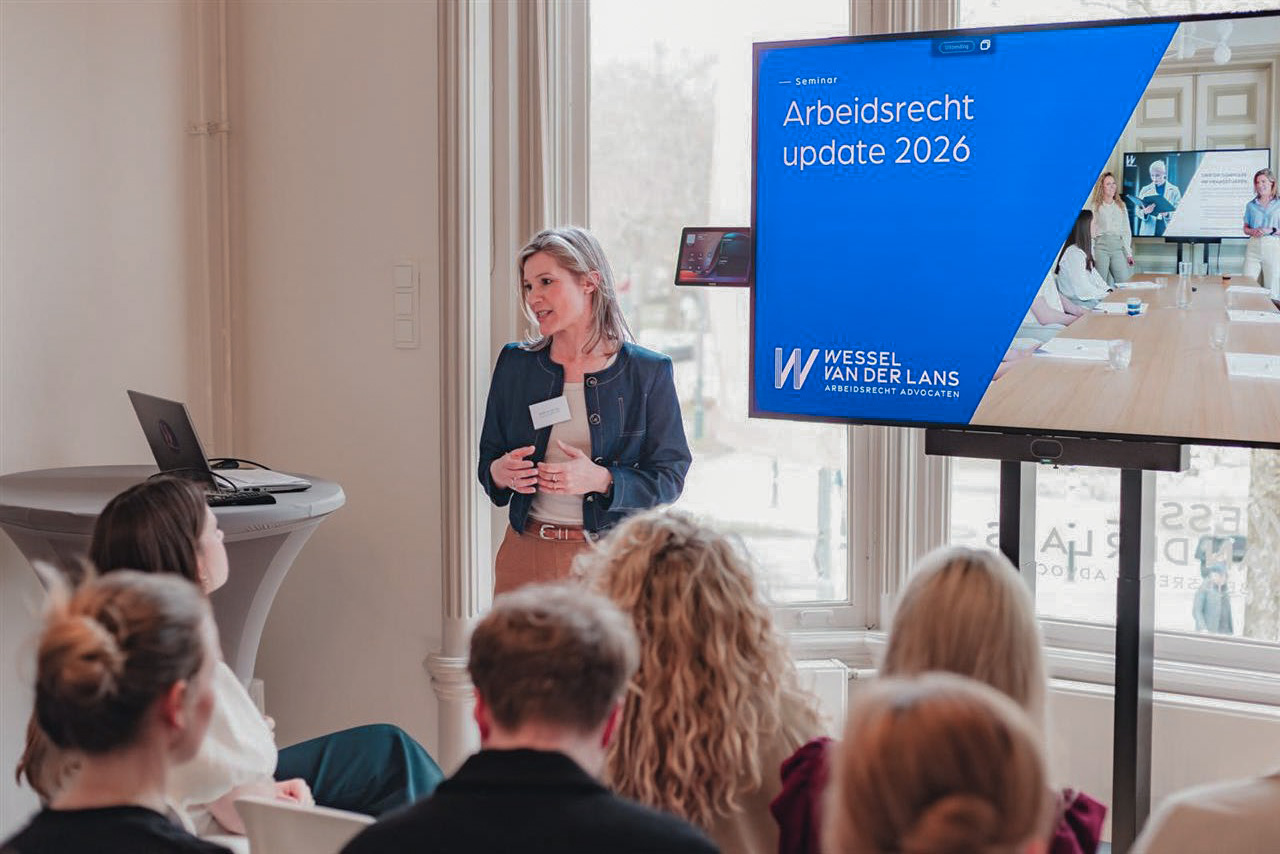
Employment law attorney Emilie van der Lans describes three important changes that are coming.
1. Extension of employer’s information obligation
The law lists, in article 7:655 of the Dutch Civil Code, what information the employer must provide (in writing or electronically) to the employee who enters their service. This includes, for example: the employee’s position, the date of commencement of employment, entitlement to vacation or the method of calculating entitlement, and whether the employee will participate in a pension scheme.
The Directive further extends the information obligation for the employer. The employer will soon have to provide even more data to the employee, for example about the employer’s general training policy and breaks and daily and weekly rest periods. Also, after August 1, 2022, the employer will have to provide information about the procedure that the employer and employee must follow if the employment relationship is terminated, including the deadlines within which an appeal against dismissal can be lodged. How far this information obligation regarding dismissal extends is not yet clear. It seems to me somewhat excessive if the employer would soon be required to explain the entire dismissal law to an employee. Furthermore, the Directive contains a provision that requires the employer to provide a document to the employee for every change in aspects of the employment relationship. This must be done no later than the day the change takes effect.
What is clear in any case is that the administrative obligations of employers will continue to increase. Employers will soon have to confirm even more matters in writing to employees, and there will also be a penalty for not complying with this obligation. The Directive does provide a tip to national legislators to develop templates and models in order to fulfill some of these obligations. Hopefully this will somewhat alleviate the administrative burden.
2. No more prohibition on secondary employment, unless..
The Directive will also lead to a limitation of the prohibition on secondary activities as we currently know it. The Directive stipulates that the employer cannot prohibit the employee from working for other employers outside working hours, unless there is an exceptional case.
Dutch law is expected to include a new legal article stating that a prohibition on secondary activities is in principle not permitted during the employment relationship. It will be included that only by way of exception is there still room for such a clause. An exception may apply if secondary work must be prohibited for the sake of: protecting the health and safety of employees, including by limiting working hours, protecting the confidentiality of business information, the integrity of public services, or preventing conflicts of interest.
3. Offering free training
The Directive further stipulates that training that the employer is required to offer to the employee (based on law or a collective labor agreement) for their position must be offered free of charge. Following the training must also be considered as working time and must, if possible, take place during working hours, according to the Directive. This obligation does not relate to vocational training or training that employees are required to take to obtain, maintain or renew a professional qualification (as long as the employer is not legally required to offer these).
At this time, it is not yet clear what this will mean for the study cost clause as we currently know it. Based on such a clause, an employee may in some cases be required to (partially) repay the costs of certain training. And that seems at first glance incompatible with the above provision. There is also still uncertainty about employees who take training to be able to advance in their work. Is that still the work for which the employee was hired?
In Conclusion
The Directive prescribes changes to Dutch employment law that affect the (contractual) freedom of employers and lead to additional administrative obligations. This stems from the idea that employees have the right to information about essential aspects of the employment relationship and to certain minimum entitlements to working conditions. I do wonder whether the changes prescribed by the Directive address the most urgent issues within European employment law. But I am also curious about your opinion. Questions or comments can be sent via emilie@wesselvanderlans.nl or via our other contact options.
This blog describes only some main points, does not aim to be complete and is intended only as an orientation. Therefore, no rights can be derived from this blog.